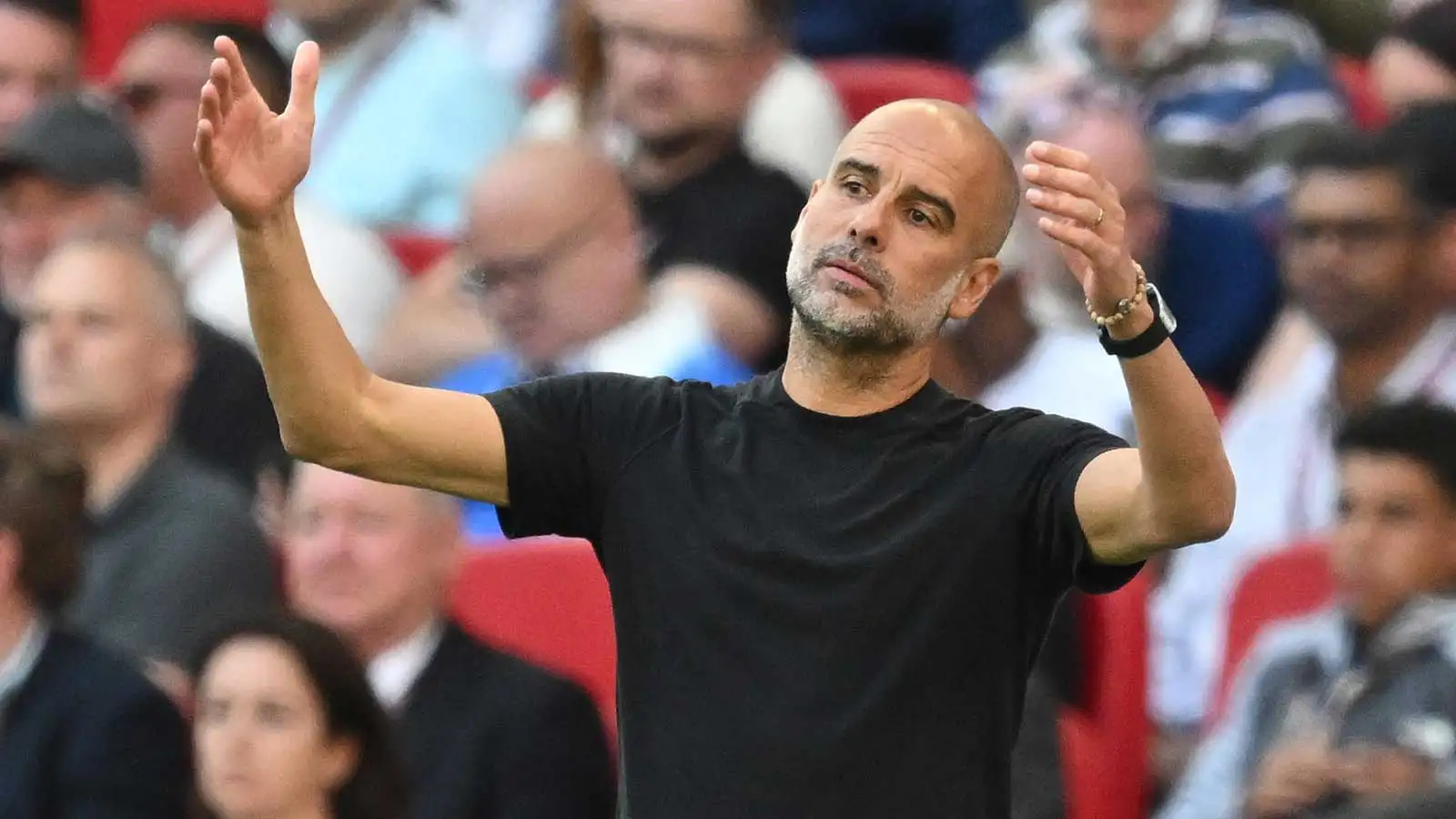
Pep Guardiola marked his 100th Champions League match in charge of Manchester City on Tuesday, but the night belonged to Bayer Leverkusen.
What should have been a celebratory evening for the Spaniard instead ended in stunned silence at the Etihad as the Bundesliga visitors danced in full voice after a memorable 2-0 victory.
Guardiola had warned of more lows than highs in Europe this season, and this defeat felt like one of those low points.
The manager’s bold gamble; 10 changes from the side that lost at Newcastle; backfired spectacularly, leaving City disjointed and Leverkusen to seize a famous scalp.
A gamble that misfired
Guardiola did not hide from criticism. “I have to accept it,” he told TNT Sport, acknowledging that the scale of rotation may have been excessive. He defended his intent to involve the whole squad across a long season but admitted the experiment robbed the team of rhythm and confidence.
“They played not to make mistakes instead of doing what we had to do,” he said, taking full responsibility for a performance that fell short of expectations.
Leverkusen boss Kasper Hjulmand was measured in his praise, noting the tight fixture schedule and the unusual scale of City’s rotation, but also acknowledging the quality that still sat on the bench for the hosts.
Chaos, luggage delays and a shocked opponent
The night began oddly for Leverkusen after a luggage problem forced their plane back to the gate, delaying arrival in Manchester. Yet the disruption did nothing to dent their resolve. City’s raft of changes left even Leverkusen staff “shocked”, and the visitors sensed an opportunity.
With several of their own senior players missing, Leverkusen still produced a performance of courage and calm, while City’s makeshift XI struggled to click.
Superstars Erling Haaland, Phil Foden and Rayan Cherki started on the bench and, when introduced, could not spark a rescue. Omar Marmoush’s chance up front went begging, and fringe players like Savinho and Oscar Bobb hovered on the edges of the contest without influence. City looked slow and ponderous; the cohesion that usually defines them was absent.
Guardiola reflects on being “too nice”
“I always like to be too nice and involve everyone,” Guardiola admitted, explaining his desire to rotate amid a congested calendar. He lamented the missed opportunity and the blocked shots, slips and lack of confidence that plagued his side. The defeat now piles pressure on City ahead of a daunting trip to Real Madrid on 10 December.
Former City midfielder Michael Brown captured the mood on BBC Radio 5 Live: the decision to rotate so heavily handed Leverkusen belief and momentum, and many will argue the safer route would have been to win first, then make changes.
A night to remember for Leverkusen
For Bayer Leverkusen, the evening was pure elation. Alejandro Grimaldo’s rasping strike and Patrik Schick’s towering header sealed a shock win, and the travelling fans; led by a drummer and a microphone-wielding supporter, celebrated with players in a jubilant end-of-night chorus.
Hjulmand praised his players’ character and composure, calling the result “a night to remember” and a fuel for the club’s development. Defender Jarell Quansah echoed that sentiment, highlighting the grit and leadership shown by a side missing several senior names.
Aftermath and what comes next
Guardiola’s landmark Champions League appearance will be remembered for the wrong reasons.
The experiment in rotation exposed vulnerabilities and handed Leverkusen a famous victory. For City, the message is clear: squad depth is vital, but timing and balance matter even more. For Leverkusen, the win is a statement of belief and resilience that will reverberate long after the drums have stopped.
I can turn this into a punchy match infographic summarising key stats, substitutions and turning points.































Comments
Sign in with Google to comment, reply, and like comments.
Continue with Google